
The United Kingdom on Friday announced a joint investment package with Tata Steel worth 1.25 billion pounds, including a government grant of 500 million pounds, for the country's largest steelworks in Wales that will help protect thousands of jobs and boost the British economy. The government's grant has been dubbed as one of the largest British government support packages in history and a "defining moment" for the country's steel industry.

Billionaire Gautam Adani's group is building the world's largest renewable energy park in Gujarat, as it eyes a massive 45 GW capacity to generate electricity largely from solar energy. Speaking at the opening of 'Energy Revolution: The Adani Green Energy Gallery' at the Science Museum in London, Gautam Adani said his group's renewable energy arm, Adani Green Energy, is leading an energy transition that honours the commitment of taking care of the planet not just for this generation and the next but also for generations to come. "As the world's leading solar power developer and India's largest renewable energy company, we are taking very big steps," he said.

ABB India's March quarter results (Q1CY24) were led by strong margin performance. Revenue was, however, largely in line with estimates at Rs 3,080 crore (up 28 per cent Y-o-Y and up 12 per cent Q-o-Q). The growth was across electrification (30 per cent Y-o-Y), process automation (73 per cent Y-o-Y) and robotics & motion (8 per cent Y-o-Y).

When Vineet Mittal first got into solar power, sometime around 2009, and was planting solar panels in Gujarat, renewable energy looked like a sector ripe for startups. Renewables were clearly the future of energy, and the big boys - Mukesh Ambani's Reliance, Adani Group, and the Tatas - were focusing much more on coal and petroleum. Little did Mittal know that things were going to change drastically.

India will require a total investment of $10.1 trillion to achieve net-zero emissions by 2070, while the nation could face a shortfall of $3.5 trillion, a study by CEEW Centre for Energy Finance (CEEW-CEF) said. At the recently concluded COP26, Prime Minister Narendra Modi announced India's aim to achieve net-zero emissions by 2070. "India would need cumulative investments of $10.1 trillion to achieve net-zero emissions by 2070, according to an independent study released today by the CEEW Centre for Energy Finance (CEEW-CEF)," a statement said.

Use of 10 per cent ethanol-blended petrol has led to a saving of over Rs 41,000 crore in the foreign exchange for the country, minister of state for environment, forest and climate change Ashwini Kumar Choubey said on Wednesday. Speaking at an online event of auto industry body SIAM on sustainable mobility, the minister said the government is working in multiple ways to encourage sustainable mobility. "India recently achieved 10 per cent ethanol blending target 5 months in advance, saving over Rs 41,000 crore worth of fuel imports for the nation," Choubey noted.

Asia's richest man Gautam Adani's group on Tuesday said it will deploy hydrogen fuel cell operated trucks for mining logistics and transportation as part of its decarbonisation plan. "Adani Enterprises Ltd (AEL), part of the diversified Adani portfolio of companies, signed an agreement to launch a pilot project to develop a hydrogen fuel cell electric truck (FCET) for mining logistics and transportation with Ashok Leyland, India, and Ballard Power, Canada," it said in a statement. This collaboration marks Asia's first planned hydrogen powered mining truck.
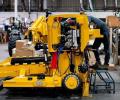
Existing optimism about the capital goods sector has been enhanced by the Assembly election results, which were favourable for the BJP. The prospects of political continuity led to renewed interest in the sector. There are demand-supply gaps, especially in power, and visibility of improved pricing and strong order flows, including from private enterprises.

Adani Group on Thursday said it has formed a 50:50 joint venture with Japanese conglomerate Kowa Group for sale of green hydrogen in Japan, Taiwan and Hawaii markets. Billionaire Gautam Adani-led conglomerate is investing up to $50 billion over the next 10 years in setting up a fully integrated green hydrogen ecosystem in India. This includes the production of 1 million tonne of green hydrogen in the initial phase which will be ramped up to 3 million tonne later.
Reliance Industries on Tuesday said it will acquire a majority stake in California-based solar energy software developer SenseHawk for $32 million (around Rs 256 crore). The acquisition of a 79.4 per cent stake in SenseHawk is part of the conglomerate's aggressive push into renewable energy to decarbonise its oil and chemical-dominated business. SenseHawk, founded in 2018, develops tools for the solar industry to help companies streamline processes and use automation. It had a turnover of $2.3 million in last financial year.

More and more women are making their presence felt in jobs related to sciences, technology, and engineering across organisations.

French IT firm Atos is planning to hire 15,000 people in the next 12-18 months in India, including climate experts, as it moves towards decarbonisation by 2028, chief operating officer (COO) Nourdine Bihmane said. "India is a strategic market for Atos. "We have been present here for the last 30 years, and we have grown organically since. "People and innovation are our two key drivers to build momentum. "India represents one-third of our total workforce," Bihmane said. Atos has around 40,000 employees in India.

Things are looking up for engineering firms and Siemens is likely to be one of the leading beneficiaries. Apart from the generic revival in activity, which is expected to continue through the 2023-24 financial year (FY24), the Budget has a strong infrastructure thrust, which works in Siemens' favour. The company reported a standalone Ebitda (earnings before interest, tax, depreciation and amortisation) of Rs 550 crore (up 66 per cent year-on-year or YoY) in Q1FY23 (Siemens follows the October-September accounting year).

The government may provide for targeted fiscal incentives and allocation of funds for promotion of green hydrogen in the country in Union Budget 2022-23, which is slated to be unveiled in Parliament on Tuesday. The government launched National Hydrogen Mission in 2021. Earlier this month, Power and New & Renewable Energy Minister R K Singh had indicated that a green hydrogen policy will be unveiled in February which would feature many incentives to boost green hydrogen in the country. "While 2021 saw the launch of National Hydrogen Mission, it is likely that the Budget may provide for targeted fiscal incentives for R&D in green hydrogen segment, creation of domestic supply chain for hydrogen and reduce customs duties on electrolysers to boost green hydrogen production," says Venkatesh Raman Prasad, Partner, J Sagar Associates (JSA).

Billionaire Mukesh Ambani's Reliance Industries has invested euro 25 million in German solar wafer maker NexWafe GmbH to use the firm's technology to set up giga-scale wafer manufacturing facilities in India. "NexWafe GmbH (NexWafe) today announced the induction of Reliance New Energy Solar Limited (RNESL), a wholly-owned subsidiary of Reliance Industries Limited (Reliance) as a strategic lead investor in its euro 39 million ($45 million) Series C financing round with an investment of euro 25 million ($29 million) in phase one," the Indian firm said in a late Tuesday evening statement. The investment by Reliance will accelerate product and technology development for NexWafe, including the completion of the commercial development of NexWafe's solar photovoltaic products on prototype lines in Freiburg.
It was August 2007. Tata Steel was turning 100. Jamshedpur, its hometown, had an air of celebration. The line-up for the special event included the launch of Air Deccan's commercial flight connecting Kolkata and Jamshedpur, and release of Russi Lala's new book, Romance of Tata Steel. There was also the screening of The Spirit of Steel, a 20-minute documentary directed by Zafar Hai showcasing Tata Steel's legacy, and a corporate anthem penned by Javed Akhtar and composed by Shankar, Ehsaan and Loy.

Reliance Industries Ltd's focus on the next hypergrowth opportunities in clean tech and its path to decarbonisation has the potential to spur re-rating, raises clarity on investment cycles and reduces investor worry, brokerages said. RIL chairman Mukesh Ambani at the company's 'Green AGM' on Thursday committed Rs 75,000 crore over the next three years to set up an integrated Green Energy Giga Complex across 5,000 acres in Jamnagar, Gujarat which will contain four giga factories. The complex, which would be one of the world's largest renewable manufacturing facilities, would have an integrated solar photovoltaic module factory, an energy storage battery factory, electrolyser manufacturing for hydrogen production, and manufacturing of fuel cells so that hydrogen can be used in transportation.

Amazon

In December 2019, the India arm of Deloitte Touche Tohmatsu surprised many with its ultra-competitive bid to become the transaction advisor for the country's largest strategic divestment in Bharat Petroleum Corporation (BPCL). The multinational major quoted just Rs 1; the second-highest bidder, SBI Caps, reportedly quoted Rs 15-17 crore. For Deloitte, the motivation was to bag a prestigious deal adding a national energy company to its portfolio. No doubt, it expected BPCL to go to a marquee buyer in quick time.

Billionaire Mukesh Ambani on Wednesday pitched for using the USO Fund to subsidise smartphones for select groups to help penetrate the digital revolution and said India should make the rollout of 5G or the fifth-generation technology standard for broadband cellular networks a national priority. As much as 5 per cent of the licence fee paid by telecom operators goes to the Universal Service Obligation (USO) Fund, which was set up in April 2002 for achieving universal service objectives by providing access to telephone services in rural and remote areas and creation of infrastructure for mobile services and broadband in these areas. However, according to the CAG, less than half of the funds so collected are transferred for the said purpose.

'It won't help being complacent about the momentum and valuations of equities that currently exist.'
Reliance Industries will by 2030 create or enable capacity to generate at least 100 gigawatts of electricity from renewable sources, which can be converted into carbon-free green hydrogen, its chairman Mukesh Ambani said Friday as he outlined a 1-1-1 vision to bring down the cost of hydrogen to under $1 per 1 kg in 1 decade. The focus on generating electricity from renewable sources of energy such as solar and wind -will help cut carbon emissions in the world's third-largest greenhouse gas emitter. The same electricity, when converted into green hydrogen, can replace petrol and diesel in automobiles and other fuels in the industry, helping cut down on the use of fossil fuels, carbon emissions and reduce import dependence.

Reliance Industries Ltd on Thursday announced a Rs 75,000 crore investment in new energy business over the next three years as the operator of the world's largest oil refinery pivots towards a greener and cleaner version. Reliance will build solar manufacturing units, a battery factory for energy storage, a fuel cell-making plant and an electrolyzer unit to produce green hydrogen as a part of the business, chairman Mukesh Ambani said at the company's annual general meeting with shareholders on Thursday. It will also set up 100 gigawatts (GW) of solar power generation capacity by 2030 and invest in setting up a carbon fibre plant.

bp had last year bought 49 per cent stake in the 1,400-odd petrol pumps and 31 aviation turbine fuel stations owned by RIL for $1 billion.

'Rising Covid cases and localised lockdowns are being closely monitored.'

For deciding which vehicles are to be scrapped, the setting up of fitness centres and regulating them would be a humongous task.

The target is called Intended Nationally Determined Contributions.

Pollution is not merely the price to be paid for growth; it is also a drag on the same growth.

CLP saw early that the pollution caused by China's rush for industrial growth would lead inevitably to demands for cleaner electricity.

Studies suggest net benefits of hydro-power, nuclear energy or natural gas as sources of electricity are greater than those of wind and solar.
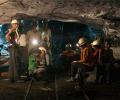
'Greenpeace has been brutal in targeting both India and the Manmohan Singh government. The push to go after Indian coal is driven by its long-term agenda. What is surprising is that China has not been meted out the same treatment, despite the fact that the rise of China as an economic power has been built around generating power from coal. 'Being richer and more affluent, yet far less democratic, there is less room for an NGO such as Greenpeace to drive home a complicated global agenda, so there is more of a tendency to go along with anything the Chinese offer despite China being the biggest by far with regard to coal use. But for India, it reserves tougher prescriptions, notably for its middle class, says Srinivas Bharadwaj.

Developed and developing countries are very different and they are different from variety of reasons on climate change.
